Organic mattress materials · A practical guide
Latex Layers Explained: Comfort, Support, and What to Compare
A latex mattress is not defined by one sensation. Its character emerges from the composition, thickness, firmness, and arrangement of its layers—along with the cotton, wool, and other materials that surround them. To compare latex beds well, look beyond the word “natural” and examine how each layer works, what its certifications actually cover, and how the manufacturer recommends caring for the finished mattress.
Published October 20, 2026
The feel is a composition, not a label
Latex has a distinctive reputation in the world of sleep: buoyant, responsive, and resilient. Unlike a material that slowly yields around the body, latex generally springs back quickly when pressure shifts. That lively quality can make turning feel easier and create a sensation of being gently held up rather than deeply enveloped. But no two latex mattresses are guaranteed to feel alike. A mattress made with latex may have a firm core beneath a softer comfort layer, a single slab with one consistent feel, or multiple layers arranged to create a more considered transition from surface to support.
“Latex” therefore tells you something about a material family, not everything about the experience of sleeping on a particular bed. A useful comparison starts with the construction: how many layers are present, how thick each one is, whether the layers can be rearranged, and how the cover and any natural batting influence the surface. Those details matter more than a broad adjective such as “plush,” “supportive,” or “cooling” when you are trying to understand what a mattress may feel like in your own bedroom.
It is also worth separating a material’s origin from its finished performance. Natural latex is made using latex collected from rubber trees, but sourcing, processing, formulation, and manufacturing vary. A mattress may combine latex with cotton, wool, or other components. Reading the complete materials description helps turn an appealing headline into a more useful picture of the bed.
What the layers do
A layered mattress is best understood from the surface down. The uppermost materials influence first contact: whether the bed feels cushioned, springy, firm, or gently yielding. Beneath them, a comfort layer can soften the transition into the denser core. The support layer provides the deeper foundation of the mattress, helping it resist compression under the sleeper’s weight. A cover completes the construction, and may add texture, quilting, or a thin layer of wool or cotton.
In a latex mattress, the upper latex layer often has a softer feel than the core. That arrangement can offer a little more give at the shoulder or hip while retaining a firmer base below. A thicker or firmer comfort layer can create a more substantial surface; a thin soft layer over a firm core may feel comparatively buoyant and close to the underlying support. The difference can be subtle on paper and pronounced in use, which is why layer specifications deserve careful attention.
Not every mattress uses a separate comfort layer. Some are built with a single latex core, while others combine two or more slabs. In a flippable mattress, the layers or surfaces may offer different firmness choices. Where layers are individually wrapped, the design may help keep them in place, though it is still sensible to check how the mattress is assembled and whether the maker permits rearranging or flipping them. Construction descriptions should make these points clear rather than leave the reader to infer them.
The cover is part of the sleep surface, too. Organic cotton may feel soft and breathable; wool quilting can add a light cushion and is often included for moisture management or as part of the mattress’s fire-safety design. A removable cover can make airing or spot-cleaning more convenient, but removable does not necessarily mean machine washable. Confirm care instructions before treating a cover like ordinary bedding.
Dunlop and Talalay: different processes, not a simple ranking
Dunlop and Talalay refer to different methods of producing latex foam. Their names can be useful when comparing mattresses, but neither should be treated as an automatic promise of a particular comfort level or quality. The finished feel depends on the formulation, firmness, thickness, design, and other materials in the bed—not solely on the process name.
Dunlop latex is commonly described as having a denser, more grounded feel, particularly in firmer constructions. Talalay latex is often associated with a lighter, more uniform feel. Those descriptions can help establish a starting point, but they are not a substitute for specific construction information or, where available, a meaningful in-person trial. Different manufacturers may offer varied firmnesses within either method, and perceptions of softness are personal.
For an apples-to-apples comparison, ask whether the mattress uses Dunlop or Talalay latex in each layer, not just somewhere in the product. A bed may use one process throughout or combine materials. Look for thickness and firmness details layer by layer. If the listing only says “latex core,” the absence of detail is itself a reason to seek clarification before deciding.
Firmness, pressure relief, and the way you sleep
Firmness is one of the most frequently advertised mattress characteristics—and one of the least universal. A “medium” feel from one maker may not match another company’s medium. Body shape, weight, habitual sleep position, personal preference, and the bed base can all influence how firm a mattress feels in practice. Even the thickness and quilting of a protector or mattress pad can change the first impression.
Side sleepers often pay close attention to pressure at the shoulder and hip. A surface with some give may feel more accommodating, while a firmer construction can feel less yielding. Back sleepers may prefer a balance that feels supportive without being uncomfortably hard. Stomach sleepers commonly consider whether the surface allows the hips to sink more than they prefer. These are practical ways to frame a trial, not prescriptions: comfort and fit vary from person to person, and no material guarantees a particular spinal position or relief from pain.
When comparing options, look for an explicit description of the firmness of each layer and the overall mattress. If a bed offers multiple firmness configurations, check whether they are achieved by flipping the mattress, selecting a different model, or changing the order of layers. A reversible design may provide meaningful flexibility, but only if the maker clearly identifies each side and explains how to use it.
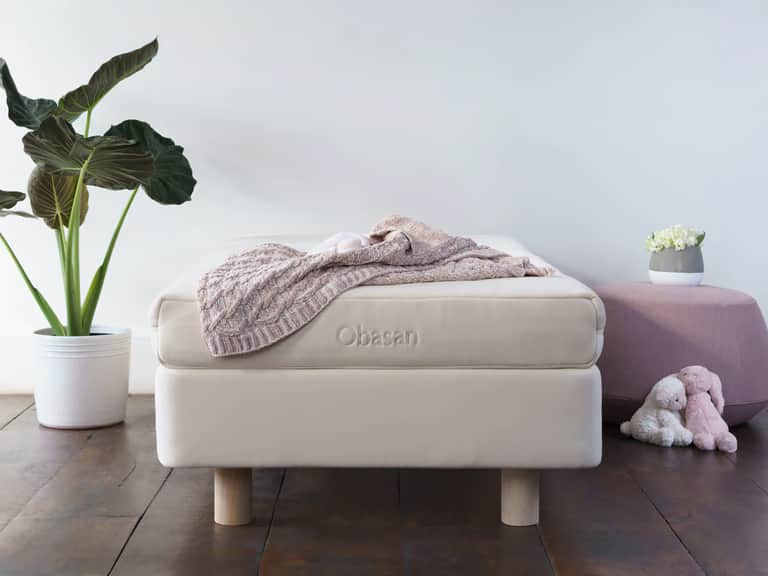
For example, the Obasan Organic Dunlop Latex Mattress for Children is described as a six-inch mattress with two three-inch certified organic Dunlop latex cores, one medium and one firm, so it can be flipped to choose between those feels. Its listed construction also includes an organic cotton jersey cover and moisture-wicking wool. This example illustrates why the layer recipe matters: the product description gives more practical information than the word “latex” alone. It is specified for children up to 150 pounds, so its intended use should be considered rather than assumed to suit every sleeper.
A layer-by-layer comparison checklist
Before comparing prices or making a shortlist, collect the same basic details for each mattress. A consistent checklist makes differences easier to see and helps separate a well-described product from one relying on vague material language.
- Number of layers: Is the mattress a single latex core or a layered design?
- Thickness: How thick is each latex layer, and what is the total mattress height?
- Latex type and process: Does the maker specify natural, synthetic, or blended latex, and whether it is Dunlop or Talalay?
- Firmness by layer: Are the comfort and support layers described separately, or is only an overall feel given?
- Layer arrangement: Are layers fixed, individually wrapped, reversible, or user-adjustable?
- Other materials: What are the cover, quilting, and any fire-barrier components made from?
- Certifications: Which materials or manufacturing stages does each certification apply to?
- Care: Is the cover removable, and what are the instructions for airing, spot-cleaning, and rotation?
- Trial and warranty: What are the return conditions, exclusions, and warranty terms?
- Foundation compatibility: What type of base is recommended, and is an adjustable base permitted?
These details are more useful together than in isolation. A two-layer bed with a three-inch softer top and a firmer support core is not directly interchangeable with a single slab of the same total thickness. Nor does a higher mattress automatically mean more pressure relief: height may come from the core, comfort layers, quilting, or a combination. Ask what each inch contributes.
Certifications: what the marks can—and cannot—tell you
Certification language is important when shopping for organic mattress materials, but it needs to be read precisely. A mark does not necessarily certify every part of a finished mattress. It may apply to a particular raw material, textile, ingredient, or stage of processing. A mattress can contain certified latex alongside other components whose sourcing or certification status differs.
GOLS, the Global Organic Latex Standard, is associated with organic latex and its supply chain. GOTS, the Global Organic Textile Standard, applies to textiles and addresses organic fiber processing as well as environmental and social criteria within its scope. These certifications are not interchangeable: a GOTS-certified cotton cover does not, by itself, establish that the latex core is certified organic, and a GOLS claim does not certify every textile or accessory in the mattress.
When a manufacturer states that a mattress is certified, look for the name of the standard, the certified component, and details that allow the claim to be checked. Ask whether the certification applies to the latex itself, the cotton cover, the wool, or the finished product. A careful materials page should make these distinctions understandable. If a certification mark appears without a clear explanation, request the documentation or a direct link to the relevant certificate or certifier’s verification resource.
Also distinguish organic sourcing from other health or emissions claims. Terms such as “low VOC,” “non-toxic,” and “chemical-free” may be used broadly in marketing. They do not mean the same thing as a specific organic certification, and the words alone do not explain what has been tested, excluded, or verified. Look for precise, component-specific information rather than treating a cluster of reassuring phrases as proof.
Materials sourcing and the complete construction
Natural latex begins with rubber tree sap, but the origin of a material is only one part of its story. A well-documented description should identify what the latex is, how it is certified where relevant, and where it appears in the mattress. If a product is presented as an organic latex bed, the shopper should be able to understand whether that description refers to all the latex layers or only a portion of the construction.
Likewise, “natural” is not synonymous with “organic,” and neither word tells you whether a finished bed contains blends or other materials. Look for a complete bill of materials, including the cover, batting, adhesives if used, and any fire barrier. Manufacturers may use wool as a quilted comfort material or as part of a fire-safety strategy; its presence and role should be stated plainly. If you have a known sensitivity to latex, wool, or another component, contact the manufacturer and consult a qualified health professional as appropriate rather than relying on generalized claims about a material being hypoallergenic.
For a U.S. shopper, it may also be useful to check where the mattress is made, where its materials are sourced, and whether the brand explains its supply chain. A country-of-manufacture statement is not the same as a complete account of raw-material origin. Transparency is most helpful when it is specific, consistent, and tied to individual components.
Care, foundations, and long-term use
Latex is resilient, but mattress care still matters. Use the maker’s instructions rather than assuming that a natural material can be washed or exposed to sunlight. Many mattress covers are designed for spot-cleaning only, and latex cores generally should not be soaked. A waterproof or washable protector can help guard against spills and everyday wear, but confirm that it fits correctly and does not conflict with the mattress warranty.
Ask whether the mattress should be rotated, flipped, or left in one orientation. A flippable mattress may be designed to offer different firmnesses on each side; a one-sided mattress should not be flipped unless the manufacturer says it can be. Rotation instructions can also differ by model. Keep written care guidance with your purchase records, and note any requirements for using an approved foundation.
A suitable base supports the mattress according to the maker’s specifications. Slat spacing, platform construction, and adjustable-base compatibility can all be relevant. The wrong foundation may affect performance or warranty eligibility, so verify the precise requirements before setting up the bed. Consider mattress height as well: a thicker layered construction changes the overall height of the sleep surface and may influence sheet fit, ease of getting in and out of bed, and compatibility with a frame.
Durability claims should be considered alongside warranty terms, not in place of them. Read the length of coverage, what defects are included, and what conditions may void it. A long warranty does not necessarily mean every change in comfort is covered. Trial periods also deserve close reading: delivery fees, pickup arrangements, return windows, and required break-in periods can vary. These are not glamorous details, but they are part of the real value of a mattress.
How to compare latex with memory foam
Sleep-surface comparison often begins with the sensation of responsiveness. Latex generally responds quickly as pressure changes, while many memory foam designs are known for a slower, more contouring response. Neither behavior is inherently better. Some sleepers appreciate the buoyant feel of latex; others prefer the more enveloping sensation associated with memory foam. Construction varies widely within both categories, so compare the specific models rather than relying on a shorthand description.
Consider movement, warmth, and the ease of changing position as personal preferences to investigate, not as guaranteed outcomes. A cover, comfort layer, room temperature, bedding, and individual perception all contribute to how a bed feels. If you share a mattress, consider whether each person wants a similar firmness and whether motion transfer or edge support matters in your setup. Ask the manufacturer for construction details and test the bed under the conditions in its published trial policy when possible.
For sustainability-minded shoppers, material origin and end-of-life questions may also be part of the comparison. Ask about component sourcing, repairability, packaging, delivery distance, and local disposal or recycling options. No single material label can answer every environmental question; the most useful assessment considers the complete product and its life cycle.
Questions worth asking before you buy
A concise conversation with a retailer or manufacturer can resolve uncertainties that a product page leaves open. Keep the questions specific and request written answers for details that affect certification, fit, or warranty coverage.
- What is the latex type and manufacturing process in each layer?
- What is the thickness and firmness of every layer?
- Does the latex contain any synthetic or blended content?
- Which components are certified, and what does each certification cover?
- Can the mattress be flipped, rotated, or rearranged?
- What care products or cleaning methods should be avoided?
- What foundation or slat configuration is required?
- How do the trial, return, delivery, and warranty policies work in practice?
The considered choice
The most satisfying latex mattress comparison is less about chasing a fashionable descriptor than understanding the recipe. A clear layer diagram, exact material names, credible component-level certifications, and practical care guidance make it easier to judge what you are considering. They also help reveal where information is missing.
Start with the feel you prefer, then examine the construction that may create it. Compare latex process and firmness layer by layer; inspect the cover and other materials; verify what GOLS or GOTS certification applies to; and check the foundation, care, warranty, and trial terms. A mattress should be evaluated as a complete sleep surface, not as a single ingredient with a persuasive label.
That approach is both more discerning and more personal. The right choice is the bed whose documented construction, comfort options, and practical requirements suit your needs—not simply the one with the most elegant product language. When the details are transparent, the decision becomes less about guesswork and more about choosing the feel and materials you genuinely want to live with night after night.